

Introduction
Join us for a conversation with American author Hugh Eakin on the unlikely story behind the arrival of modern art in the United States. Drawing on his acclaimed book “Picasso’s War, How Modern Art Came to America”, Eakin tells how a rebellious Irish-American lawyer named John Quinn, one of the earliest champions of Picasso, Matisse, Brancusi, Cézanne, Henri Rousseau, Joseph Conrad, Ezra Pound, and a whole generation of European modernists, set out to assemble the greatest collection of avant-garde art in the world, at a time when in the United States it was dismissed as the work of deranged minds.
After Quinn’s death, his vision was taken up by Alfred H. Barr Jr., founding director of the Museum of Modern Art at just twenty-seven years old. Together with Paul Rosenberg, Picasso’s persecuted Paris dealer, Barr mounted the historic 1939 exhibition Picasso: Forty Years of His Art, which rescued masterpieces from the hands of the Nazis and shifted the center of the art world from Paris to New York.
Hugh Eakin is senior editor at Foreign Affairs Magazine and former editor at The New York Review of Books. His writing on museums, art, and culture has also appeared in The New Yorker, Vanity Fair, and The New York Times.
Additional information
Limited places are available and will be assigned by registration only.
——
Image credits: Jacqueline Dürrbach, after Pablo Picasso Les Demoiselles d’Avignon. Cavalaire-sur-Mer 1958, after original 1907 painting. Wool tapestry 272 x 255 cm. Fundación Almine y Bernard Ruiz-Picasso para el Arte, Madrid. On temporary loan to the Museo Picasso Málaga
Speaker
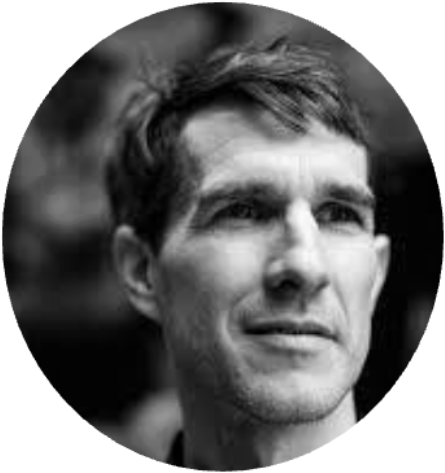
Hugh Eakin
Senior Editor at Foreign Affairs Magazine